OMXC252,184.31+0.74%
EUR/DKK7.4610+0.01%
Novo Nordisk BDKK 604.40+1.23%
Vestas WindDKK 115.30-0.52%
DAX18,947.50+0.31%
S&P 5005,473.20+0.48%
Brent Crude$82.15-0.37%
10Y DK Gov2.89%+0.04
Gold$2,341.80+0.19%
OMXC252,184.31+0.74%
EUR/DKK7.4610+0.01%
Novo Nordisk BDKK 604.40+1.23%
Vestas WindDKK 115.30-0.52%
DAX18,947.50+0.31%
S&P 5005,473.20+0.48%
Brent Crude$82.15-0.37%

Forex & Currency Analysis

Currency markets underpin every cross-border investment. From the EUR/DKK fixed exchange rate regime to major USD dynamics and emerging market FX, Axiom provides structured analysis of currency factors that impact Danish investor portfolios.

Currency Risk in a Danish Investment Context

Denmark's monetary framework is distinctive: the Danish krone (DKK) operates under a fixed exchange rate regime relative to the euro (EUR), maintained by Danmarks Nationalbank within a narrow band around the central rate of EUR 1 = DKK 7.46038. This arrangement eliminates EUR/DKK currency risk but means Danish investors with USD, GBP, JPY, or emerging market currency exposure face meaningful FX risk when investing internationally.

For Danish investors holding US equities, the USD/DKK rate (effectively USD/EUR) can be a significant source of portfolio volatility. In 2022, USD strength of approximately 15% against EUR/DKK provided a substantial tailwind for Danish holders of US assets. Conversely, periods of dollar weakness can erode returns for unhedged international allocations.

Our Forex research helps investors understand when and how to consider hedging international currency exposure, and provides analytical context for major FX pair movements that affect portfolio outcomes.

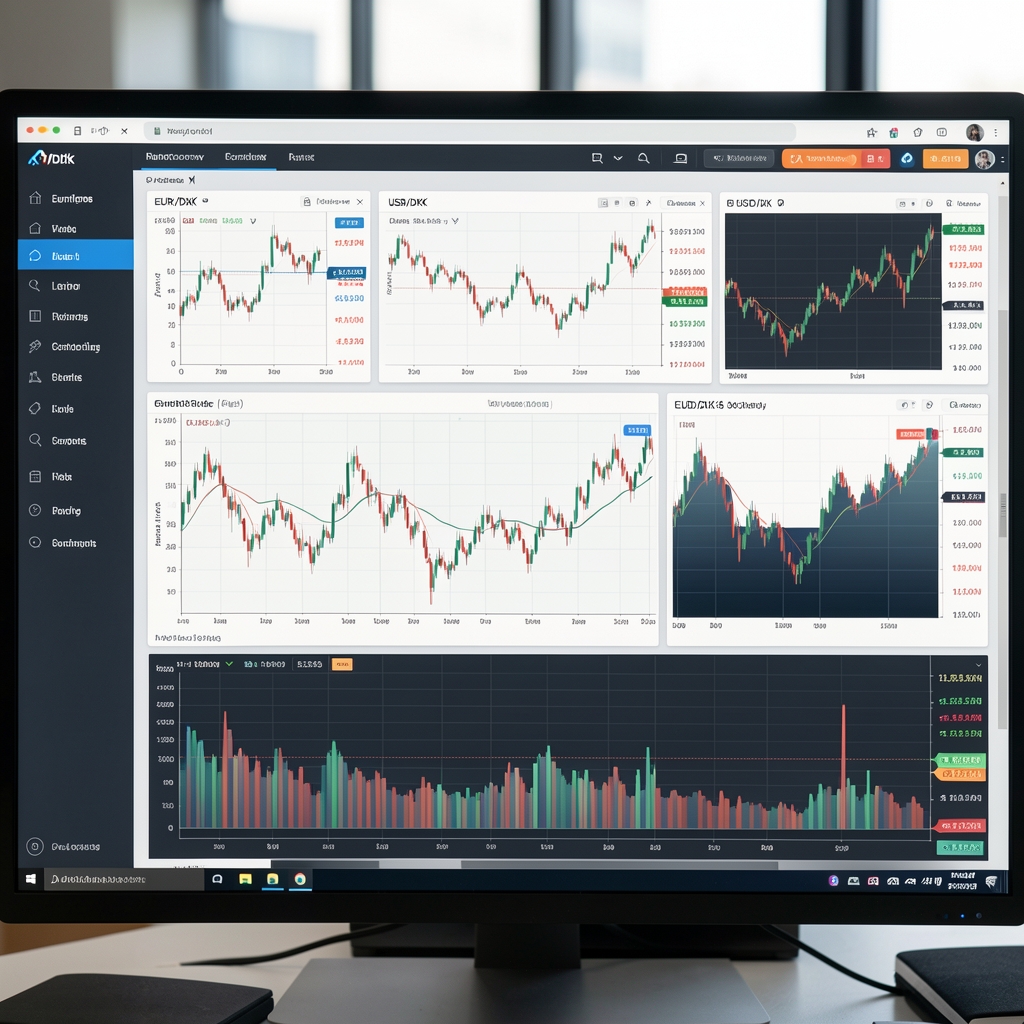
Currency exchange rate analysis dashboard showing EUR/DKK, USD/DKK and major forex pair charts on professional trading terminal
Currency pair analysis integrates central bank policy, interest rate differentials, and macroeconomic divergence factors.

Currency Pair Coverage

Axiom monitors and analyses the major currency pairs relevant to Danish and European investors.

EUR/DKKFixed Peg

EUR/DKK: The Fixed Exchange Rate

The EUR/DKK fixed exchange rate is the cornerstone of Danish monetary policy. Danmarks Nationalbank maintains the peg through interest rate adjustments and direct intervention. While the peg is highly credible — sustained since 1999 — understanding its mechanics and stress scenarios is important for institutional investors.

Key analytical areas include: Nationalbank intervention volumes, the spread between ECB and Danmarks Nationalbank rates, DKK money market conditions, and historical peg stress events (notably 2015 following the SNB shock).

7.46038Central Rate EUR/DKK
±2.25%ERM II Band
±0.5%De Facto Band
USD/DKKDerived via EUR

USD/DKK & Dollar Dynamics

Since DKK effectively tracks EUR, USD/DKK movements primarily reflect USD/EUR dynamics. The US dollar cycle is one of the most important variables for Danish investors with international equity or bond exposure. We analyse Federal Reserve policy, US economic data surprises, US dollar index (DXY) positioning, and the impact of dollar strength/weakness on different portfolio allocations.

Dollar-sensitive sectors in OMXC25 include Danish shipping companies with USD-denominated revenues and companies with significant US market exposure like Novo Nordisk.

EUR/USDMajor Pair

EUR/USD: The World's Most Traded Pair

EUR/USD reflects the relative economic and monetary policy outlooks of the US and Eurozone. ECB-Fed policy divergence, European energy supply security, and relative growth trajectories are the primary drivers. Our analysis covers rate differential models, purchasing power parity frameworks, and short-term positioning dynamics from CFTC data.

GBP/EURMajor Pair

GBP and Post-Brexit Dynamics

British pound analysis is relevant for Danish investors in UK equities (FTSE 100/250) and for companies with significant UK business. Post-Brexit trade frictions, the Bank of England policy cycle, and UK fiscal dynamics create a distinctive analytical environment for GBP. We also cover GBP/DKK implications for Nordic corporate FX exposure.

NOK/SEK/DKKScandinavian FX

Scandinavian Currency Bloc

The Norwegian krone (NOK) and Swedish krona (SEK) are important for Danish investors given trade links and Nordic equity market exposure. NOK is strongly influenced by oil prices and Norges Bank policy; SEK is driven by Riksbank decisions, Swedish property market conditions, and global risk appetite. Intra-Scandinavian FX analysis is a niche Axiom capability.

EM FXEmerging Markets

Emerging Market Currency Exposure

Danish investors accessing emerging market equities or bonds face currency risk that can dominate total return outcomes. We provide risk framework analysis for major EM currency exposures including CNY (China), INR (India), BRL (Brazil), and the aggregate EM FX basket. EM currency risk management tools — forwards, options, ETF currency-hedged classes — are also covered.

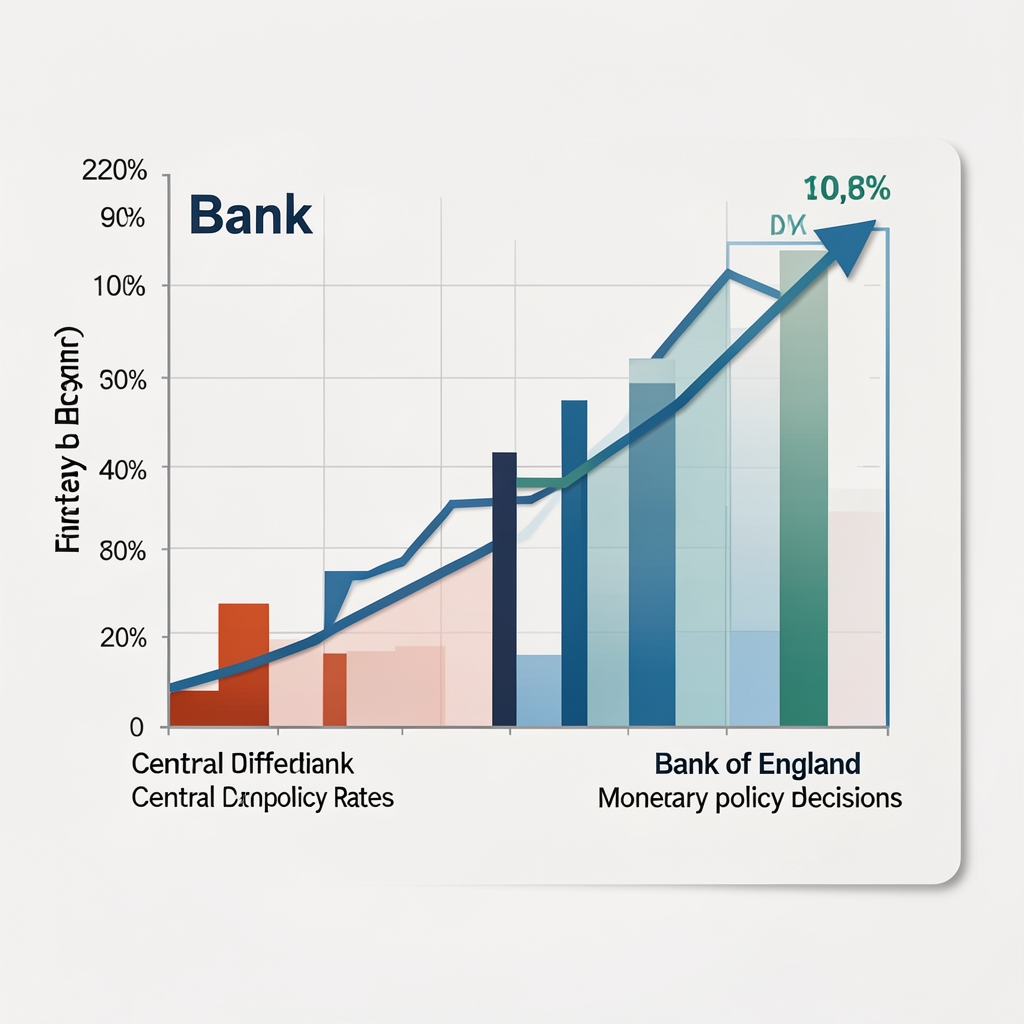
Interest rate differential chart comparing central bank policy rates across Federal Reserve, European Central Bank, and Bank of England monetary policy decisions
Interest rate differentials between major central banks are a primary driver of medium-term currency pair movements.

FX Analytical Frameworks We Apply

Interest Rate Parity & Carry Analysis

Interest rate differentials create carry trade incentives. We model covered and uncovered interest rate parity to assess whether FX moves are explained by rate differentials or represent relative mispricing.

Purchasing Power Parity (PPP)

Long-run PPP estimates provide anchor valuations for major currency pairs. We track deviations from PPP as indicators of long-term valuation extremes, while recognising that PPP is rarely a useful short-term timing tool.

Current Account & Capital Flow Analysis

Persistent current account surpluses (like Denmark's) or deficits create structural currency demand and supply. Capital flow data from BIS and national central banks reveals institutional positioning that can sustain or reverse FX trends.

Macro Divergence Models

Economic growth, inflation, and productivity differentials between currency areas generate medium-term exchange rate trends. Our macro divergence models track relative economic momentum to anticipate potential FX inflection points.

Browse FX Research Reports

Key FX Concepts for Danish Investors

Concept Definition Portfolio Relevance Hedging Instrument
Currency RiskVolatility in DKK value of foreign-currency denominated assetsHigh for US equity, EM exposureFX forwards, currency ETF classes
Transaction ExposureFX impact on specific cross-border transactionsCorporate dividend repatriationForward contracts
Translation ExposureFX impact on consolidated financial statementsNordic multinationalsBalance sheet hedging
Economic ExposureLong-term competitive impact of persistent FX movesExport-oriented sector analysisOperational diversification
Carry TradeBorrowing in low-rate currencies, investing in high-rate currenciesEM bond fund returnsStop-loss discipline
Volatility (Implied)FX options market's expectation of future price swingsOption premium budgetingFX options, variance swaps

Currency Analysis in Your Inbox

Axiom's weekly research updates include dedicated FX commentary, covering major pair movements and portfolio hedging considerations for Danish investors.